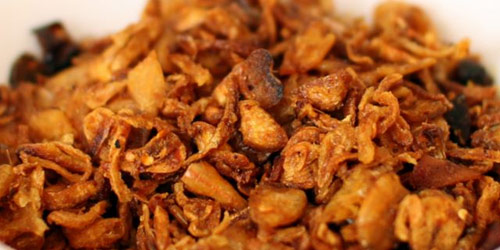
Pork with Szechuan sauce

Ingrédients :

  • 320 g of pork
  • 1 tablespoons of sake
  • 1 ½ teaspoons of cornstarch flour
  • 2 teaspoons of salt
  • 5 tablespoons of soy oil
  • 1 large onion
  • 1 box of peas
  • 1 green and red pepper
  • 50 g of pineapple in syrup
  • oil

For the batter:

  • 3 tablespoons of water
  • 2 ½ of flour
  • 2 teaspoons of cornstarch
  • 1 egg beaten

For the sauce:

  • 2 tablespoon of soy sauce
  • 3 ½ tablespoons of rice vinegar
  • 2 tablespoons of sugar
  • 15 cl of water
  • 2 ½ tablespoons of tomato ketchup
  • 1 teaspoon of cornstarch

Préparation :

Cut pork into cubes, the pepper into 2 cm pieces and onion in 2 and 4.

Drain the peas and pineapple and then cut into 2 cm pieces.

In a bowl put salt, rice wine, cornstarch flour, and pork meat then mix and let marinate 10 minutes.

Meanwhile, prepare the sauce and set aside.

Then prepare the batter by mixing all ingredients, then set aside.

Heat 2 tablespoons of oil in a wok over high heat.

Put the pork in the batter, stir to coat well then adding them to the wok and lightly brown 3 to 4 minutes on high heat, stirring occasionally. Add onion, peppers, peas and pineapple and stir and let simmer for 2 minutes on medium heat.

Transfer the mixture into a container, put back 2 tablespoons of oil in wok, then add the sauce and cook 3 minutes on medium heat.

Put back the meat and vegetables in the wok, then cook the preparation for 2 minutes and serve hot with white rice.

Tips : You can add carrots or cashews to your taste.

Anecdotes : Beef is more widespread than elsewhere, and is often cooked until it becomes a great tenderness. Sometimes the beef is sprinkled with rice flour before the steaming, to produce a more rich sauce. Sichuan cuisine, known for its tangy and spicy taste, is one of eight major regional cuisines of China, sometimes grouped into four families. It is often compared to the Hunan cuisine or that Hubei, due to proximity culinary, cultural and linguistic these three provinces.
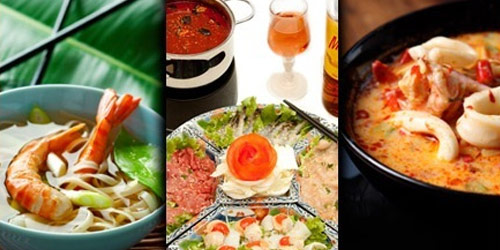
Thai fondue

Ingredients :

  • 2 L of water
  • 2 cubes of beef bouillon
  • 2 tablespoons of raw sticky rice
  • 1 tablespoon of nuoc mam sauce
  • 1 tablespoon of soy sauce
  • 1 tablespoon of chili paste
  • 1 tablespoon of sugar
  • 1 teaspoon of salt
  • 250 g of vermicelli
  • 250 g of beef
  • 250 g of pork
  • 250 g of calf liver
  • 250 g of Chinese Cabbage
  • 250 g of green beans
  • 3 cm of galangal
  • 3 kaffir leaves
  • 15 onions
  • 2 shallots
  • 2 cloves garlic
  • 2 white stalks lemongrass
  • 1 bunch basil
  • 1 bunch cilantro

Preparation :

Peel and chop the shallots, garlic and white of lemongrass , put the three spices in a bowl and set aside.

Peel and chop galangal, cut into 4 pieces the kaffir leaves and reserved.

Cut the leaves of Chinese cabbage into pieces to 5 cm and chopped coarsely the spring onions then cilantro and reserved.

Cut thin slices of calf liver, pork and beef and reserved to refrigerator.

In a skillet cook the raw sticky rice over high heat, stirring occasionally, until they become dark brown, then grind in a blender and reserved.

In a saucepan heat the water over high heat then add the beef bouillon cubes, add the fish sauce, soy sauce, sugar, salt and crushed sticky rice and mix.

Add the kaffir leaves and galangal in the broth and bring to boil.

Pour the broth into the fondue pot that you put on medium heat to keep the simmering stock.

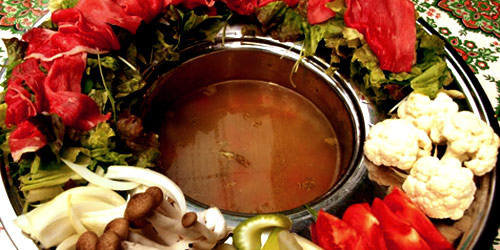
Arrange the plates containing rice vermicelli, meat, cabbage, basil, cilantro, onions and then the bowl containing three spices around the pot.

Dip pieces of meat and vegetables in broth, then in the bowl with the onion, shallots and lemongrass or in the chili sauce.

Serve with a spicy sauce or dark soy sauce.

Tips : you can replace the pork with chicken and veal liver by the calf’s heart.

Lau bo – Vietnamese fondue

Ingredients :

  • 20 cl of water
  • 20 cl of rice vinegar
  • 600 g of beef tenderloin
  • 200 g of peeled shrimp
  • 150 g of shiitake mushrooms
  • 150 g of bean sprouts
  • 1 package of rice cakes
  • 1 package of rice noodles
  • 1 can of coconut milk
  • 2 carrots
  • 1 can of pineapple
  • 2 onion
  • 1 lime
  • 1 lettuce
  • 10 g of Chinese chives
  • 10 g of parsley
  • 3 tablespoons of sugar
  • 1 teaspoon of salt

Preparation :

Soak noodles 15 minutes in cold water, then drain and set aside. Cut into 4 pieces the rice cakes.

Cut meat into thin slices. Make a small cut on the back of the shrimp and remove the black vein and put aside.

Peel carrots and cut into sticks, chopped parsley, cut the mushrooms and onion in thick slices, then Chinese spring onion of into strips 5 cm and lettuce into strips of 10 cm.

Put the onion slices over the shrimp and the beef for flavoring . The rest of onion be served in to the broth.

Boil water in a saucepan, then put the noodles to cook for 2 minutes, drain. Arrange the noodles on a presentation plate.

In a fondue pot, combine rice vinegar, sugar, salt, coconut juice, water and remaining onion.
Taste and adjust salt, sugar or vinegar, knowing that the broth should be slightly acidic, and slightly salty. If you find that the taste of vinegar is too strong, add a little water.

Drain the pineapple and cut into small pieces and then chop coarsely

Pour the contents of Mam Nem in a bowl, put the pineapple in the sauce, add the lemon juice and mix. Adjust according to your taste.

Put in the middle of the table the hot pot and the dishes containing vegetables, shrimp, meat and noodles (the fondue pot must be heated over medium heat for meal), also a bowl of hot water for soaking rice cakes.

Serve in a bowl mam nem sauce individually and use a plate for to roll the rice cake.

Place ingredients you want into the hot pot and cook for 5 minutes for shrimp, mushrooms and carrots but for beef, spring onions and Chinese vermicelli it only takes a few seconds.

Take a rice cake, soak in the bowl of warm water to rehydrate, then put on the plate, put some noodles, a salad leaf, vegetables and chunks of meat cooked on the rice cake.

Wind the rice cake, being careful not to tear and eat with the mam nem sauce.

Tips : you can replace the mam nem sauce to taste that strong enough for the sauce nuoc mam with a little chopped fresh ginger. For vegetables you can put Chinese cabbage, celery’s, tomatoes or cabbage flower according to your preference.
The Vietnamese keep the rest of soup for eat with rice vermicelli or Chinese noodles or instant noodles.

Pakoras de soja – donut soy

Ingredients :

  • 150 g of soybeans
  • 1 small onion
  • 2 clove garlic
  • 2 teaspoons of ginger
  • few fresh coriander leaves
  • 1 tablespoon curry powder
  • 1 teaspoon of chili powder
  • 2 teaspoons of salt

Preparation :

Soak in a bowl for 3 h soybeans and drain, leaving a little water to facilitate mixing. Mix coarsely using an immersion blender until dough is not too fine.

Coarsely chopped garlic, cut the onion into small cubes and grated ginger and chopped cilantro.

Add to bowl with the soy bean paste, salt, curry, coriander, ginger, onion, garlic and pepper and mix.

Heat oil in a fryer. When the oil is hot dip the balls pakoras made ​​with a teaspoon and cook 5 minutes, turning occasionally.
When the pakoras its golden brown, drain on paper towels.

Serve as an appetizer served with a sauce of coriander or tamarind.

Tips : It is possible to make pakoras with eggplant, zucchini, potatoes and other vegetables.

Anecdotes : There is no Indian cuisine but the Indian cuisines, a wide variety. This is not usually in restaurants, but in families, which can discover the diversity of cuisines. Much of the population is vegetarian by choice, by tradition, or obligation. So we find a wide variety of vegetarian recipes using especially pulses (lentils, chickpeas, etc.) for their protein intake.

Pochero – Puchero – stew

Ingredients :

  • 1 cup of chickpeas
  • 1 chicken of 1.5 kg
  • 500 g of pork
  • 2 chorizos
  • 1 large onion, chopped
  • 4 teaspoons of salt
  • 10 cloves garlic, minced
  • 1 teaspoon of black pepper
  • 4 spoons of oil
  • 1 medium onion, finely chopped
  • 2 ripe tomatoes, peeled and chopped
  • 500 g of sweet potato, peeled and chopped
  • 1 Chinese cabbage, chopped
  • 8 spring onions cut into 5 cm

Preparation :

Wash chickpeas and soak them in water overnight.
Cut chicken into pieces, cut the pork into 2, cut the chorizo ​​into slices.

Put all ingredients in a pressure cooker and cover with water, add chopped onion, salt, peppercorns and bring to boil.
Cover and simmer over low heat for 20 minutes until meat and chickpeas is almost tender.

In another saucepan, brown garlic and onion over low heat, stirring often, add tomatoes and when they are reduced to puree pour into the cocotte. Add the sweet potatoes. When half cooked, add the Chinese cabbage and onions.

Cook 25 minutes or until potatoes are cuitent.
serve separately the broth and meat surrounded by vegetables.

Tips : You can replace the pork with beef.

Anecdotes: This dish of Spanish origin was imported during the Spanish domination in the 16th and 17th century.

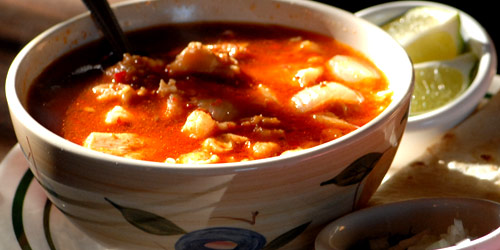
Menudo – minced pork soup

Ingredients :

  • 500 g of pork
  • 2 teaspoon of annatto seeds
  • 1 spoon of oil
  • 1 spoon of crushed garlic
  • 1 onion, finely chopped
  • 2 sliced ​​tomatoes
  • 3 potatoes, diced
  • 250 g of pork liver
  • 2 teaspoon of salt
  • 1/2 teaspoon of ground black pepper
  • 1 cup of meat broth
  • 1 lemon

Preparation :

Cut the pork into small cubes of 5×5 cm.

Cook the annatto seeds over low heat for 1 minute then remove.

Fry the garlic and onion in oil, add the tomatoes and cook until they fall into a puree. Add pork, cover and bring to boil. Simmer until tender.

Add potatoes and broth if there is not enough liquid in the pan.

Cut the liver into thin strips. Put it in the pan when the potatoes are cooked. Add salt and pepper and return to the boil.

Serve hot with lemon slices.

Tips : You can add chilli powder and add a chorizo. The Filipino menudo will usually contain tripe although variations include chickpeas, red peppers and dry grapes.

Anecdotes : This soup is originally from Mexico is this a traditional dish. Often regarded as a cure for a hangover, and is traditionally served on special occasions or with family. This dish has to be exported during the Spanish conquest in the 16th 17th century.

Bihon Pancit – fried noodles

Ingredients :

  • 1 package of rice noodles (pancit bihon)
  • 100 g of cut green beans
  • 2 carrots cut into julienne
  • 1 onion, chopped
  • 1 clove garlic, crushed
  • 2 tablespoons of soy sauce
  • 1 tablespoons of fish sauce (patis)
  • 2 chicken breasts sliced ​​
  • 1 cup of chicken stock
  • 1 lemon juice

Preparation :

In a large bowl filled with warm water, soak the rice noodles for 5 minutes to soften.

In a wok, put 2 tablespoons of vegetable oil and make heat over low heat.

Saute garlic and onion until it is transparent. Add the chicken breast and cook until browned, then season to taste with fish sauce.

Add the carrots stirring regularly then the green beans, pour half of broth and soy sauce, bring to boil and add noodles, stirring constantly until cooked.

Add the remaining broth if necessary.

Serve with a drizzle of lemon juice.

Anecdotes : Pancit or pansit is the term for noodles in Filipino cuisine. The noodles were introduced into the Philippines by the Chinese and have since been adopted in the local cooking. noodles dishes are also common in local restaurants. Food establishments specializing in noodles are often called panciterias.
Food according to tradition inherited from China, the noodles should be eaten on the day of his birthday. They are often served at birthday parties and Chinese restaurants in the Philippines often have “birthday noodles” on their menus. The noodles represent long life and good health, they should not be cut short so as not to remove the symbolism.

Pou ja – Thai Crab Stuffed

Ingredients :

  • 4 medium sized crabs
  • 300 g of ground pork
  • 6 shelled shrimps
  • 100 g of soy vermicelli
  • 30 g of green onion
  • 30 g of coriander
  • 4 fragrant dried mushrooms
  • 1 tablespoon of chili paste
  • 1 tablespoon of cornstarch
  • 1 tablespoon of palm sugar
  • 2 tablespoons of in soy sauce
  • 3 tablespoons of nuoc mam sauce
  • 2 tablespoons of lime
  • 1 teaspoon of glutamate
  • 10 g of fresh ginger
  • 1 teaspoon of freshly ground black pepper
  • 2 egg
  • 1 egg yolk
  • 2 clove garlic

Preparation :

Cook the crabs in boiling water for 30 minutes then remove all the flesh, being careful not to break the shell and clean thoroughly.

Soak the soy noodles in a cold water for 15 minutes, drain and cut

Soak 15 minutes ​​the fragrant mushroom in cold water, drain well then chopped and book.

Chopped coarsely  shrimp and garlic, then chisel green onion and cilantro and set aside.

Cut the palm sugar into small pieces .

In a bowl put the crab meat, the ground pork, shrimp, green onion, cilantro, garlic, ginger, chili paste, the cornstarch, soy sauce, pepper, eggs and 2 tablespoons of nuoc mam sauce and mix everything for a homogeneous good farce.

In a bowl put 1 tablespoon of nuoc mam sauce, lemon juice, the palm sugar and stir until the sugar is well dissolved.

Stuff the shells by packing well to prevent the stuffing from falling during cooking.

Brush over the stuffing with a layer of egg yolk and bake in oven at 180 ° C for 20 minutes.

Serve hot with white rice and palm sugar sauce.


Tips : you can cook the stuffed crabs steamed so do not brush with egg yolk and bake for 40 minutes, and if it is with a deep fryer, crabs should be well covered by hot oil and cook 15 minutes over heat strong.

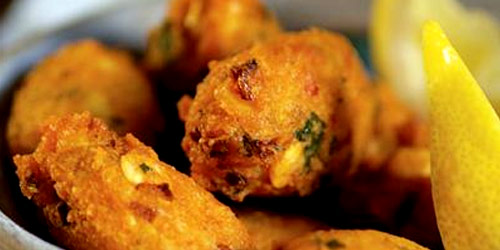
Beya kyaw – split pea fritters

Ingredients :
to 15 donuts

  • 1 cup split peas
  • 2 onions, finely chopped
  • 2 fresh red chilies finely chopped
  • 1/4 teaspoon of chili powder
  • 1/2 teaspoon of ground turmeric
  • cooking oil
  • 1 lemon

Preparation :

Faire tremper les pois cassés toute la nuit ou au moins 6 heures, les égoutter et les réduire en purée au mixeur.
Ajouter l’oignons hachés finement, le piment, le piment en poudre, le curcuma.

Faites des boulettes que l’on aplatira ensuite en un cercle de 1cm d’épaisseur ou faites des petits boudins pas trop fins ni trop épais. Vous pouvez lui donner la forme que vous voulez.

Chauffer l’huile dans une friteuse et y plonger les boulettes une à une jusqu’à ce qu’il soit dorés et croustillants. Puis les retirer et les faire égoutter sur du papier absorbant.

Servir garni d’oignon émincé et de rondelles de citron.

Tips : You can also accompany chili sauce or tamarind sauce.

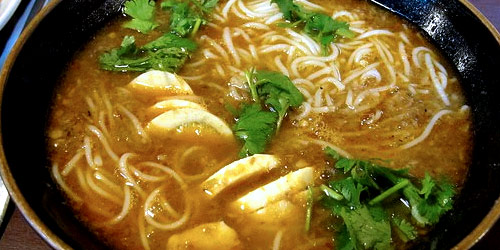
Moh hin gha – mohinga – fish soup

Ingredients :

  • 500 g of fish fillets
  • 4 onions, chopped
  • 6 cloves of garlic
  • 2 teaspoons of fresh ginger, finely chopped
  • 1 teaspoon of ground turmeric
  • 1/2 teaspoon of chili powder
  • 2 spoons of sesame oil
  • 4 spoons of peanut oil
  • 2 fresh chilies, seeded and chopped
  • 4 cups of coconut milk
  • 1 banana heart or box bamboo shoots
  • 1 teaspoon of dried shrimp paste (ngapi)
  • 1 spoon of fish sauce
  • 3 spoons of chickpea flour
  • 2 cups of coconut cream
  • 2 spoons of lemon juice
  • salt
  • 500 g of egg noodles or rice
  • hard eggs
  • coarsely chopped cilantro

Preparation :
Wash the fish and poach 5 minutes then reserve the fish and the fish broth.

Mix the onions, garlic, ginger, turmeric and chili powder until  a puree.

Heat the sesame oil and peanut oil in large saucepan and cook the puree.
When the mixture begins to brown and tie, add the fish broth, coconut milk and banana heart (or bamboo shoots).

Bring to a boil and cook over low heat until the banana heart (bamboo shoots) are tender. Dissolve the shrimp paste in fish sauce, and add to mixture then add the chickpea flour and dissolved in a little coconut milk.

Stir constantly until the resumption of boiling. Simmer 5 minutes and add the fish.

Then add the coconut cream and lemon juice, stirring until the soup begins to simmer. Taste and adjust seasoning.

Cook the noodles in salted water until crisp. Drain and place in large bowl for serve alongside the soup.

Serve the Moh hin gha in a bowl and give the guests large bowls or soup plates.

It primarily serves the noodles and pour the soup over it. The Moh hin gha should be served hot. It is often accompanied by hard eggs and cilantro that guests will put at will.

Tips : You can use the European or Chinese noodles.

Anecdotes : Moh hin gha is the national dish of Burma.
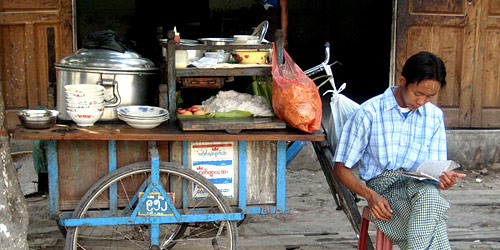
Street vendors go from house to house and offer moh hin gha bowls.
It is often used when the meal has many guests.
There is no real fair or festival without dealers moh bin gha.
The rice vermicelli, a bay of rice flour.

Ngapi htaung – shrimp paste

Ingrédients :

  • 2 tablespoons of dried shrimp powder
  • 2 tablespoons of dried shrimp paste (ngapi)
  • 2 onions
  • 4 cloves garlic
  • 2 teaspoon of chili powder
  • 1 teaspoon of salt
  • ½ lemon juice

Préparation :

Spread shrimp paste and wrap in aluminum foil.
Wrap also onion and garlic in foil and put them on the grill with shrimp paste a few minutes.
Then pounded in a mortar, and add the powdered dried shrimp, chili, salt and lemon juice. You must obtain a paste.
It is eaten in very small quantities with rice.

Balachaung – fried dried shrimps

Ingredients :

  • 20 cloves garlic, peeled and finely chopped
  • 5 onions, thinly sliced ​​
  • 250 g of shrimp powder
  • 1 teaspoon of dried shrimp paste
  • 2 cups of peanut oil
  • 2 teaspoons of chili powder
  • 2 teaspoons of salt
  • 1/2 cup of vinegar

Preparation :
Heat a wok with oil and saute garlic and onion over low heat until the mixture is doré.Réserver.
Garlic and onions are crisp and darken as they cool.
Using the same oil, fry the shrimp powder for about 5 minutes.
Add chili powder, salt and shrimp paste mixed with vinegar.
Combine ingredients and fry until crisp.
Remove from heat and let cool completely.
Stir fried garlic and onion, stirring well.
Store in an airtight jar, it can keep for weeks.
serve with rice.