Sauce tsuyu – mirin and dashi sauce

Ingredients :

  • 300 ml of dashi
  • 100 ml of soy sauce
  • 60 ml of mirin
  • 20 ml of sake
  • 20 g of sugar

Preparation :
In a small saucepan, boil the dashi, soy sauce, mirin, sake and sugar until sugar dissolves.
Simmer 2 minutes.
Cool and serve.
This sauce will keep several weeks in the refrigerator.

Tips : You can add grated ginger, wasabi (Japanese horseradish) or daikon (Japanese white radish), julienned.

Anecdotes : This is a traditional Japanese recipe for dipping shrimp or vegetable tempura. This sauce is the base of many Japanese dishes like tempura, udon, somen, soba, miso soup …

Nems sauce

Ingredients :

  • 2 tablespoons of nuoc mam
  • 8 tablespoons of water
  • 2 tablespoons of rice vinegar or white vinegar
  • 2 teaspoon of powdered sugar
  • 1 small red pepper
  • few strands of shredded carrots

Preparation :
Mix the sauce nuoc mam, water, vinegar and sugar in a bowl, heat it for 5 minutes until sugar is completely dissolved, add the pepper and chop the carrots into thin strips and allow to cool .
Serve with nems.

Ngapi htaung – shrimp paste

Ingrédients :

  • 2 tablespoons of dried shrimp powder
  • 2 tablespoons of dried shrimp paste (ngapi)
  • 2 onions
  • 4 cloves garlic
  • 2 teaspoon of chili powder
  • 1 teaspoon of salt
  • ½ lemon juice

Préparation :

Spread shrimp paste and wrap in aluminum foil.
Wrap also onion and garlic in foil and put them on the grill with shrimp paste a few minutes.
Then pounded in a mortar, and add the powdered dried shrimp, chili, salt and lemon juice. You must obtain a paste.
It is eaten in very small quantities with rice.

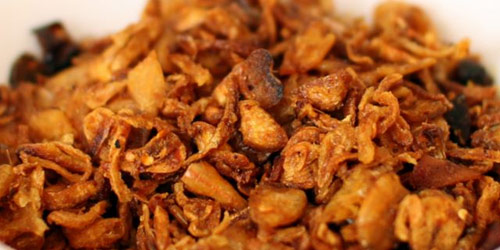
Balachaung – fried dried shrimps

Ingredients :

  • 20 cloves garlic, peeled and finely chopped
  • 5 onions, thinly sliced ​​
  • 250 g of shrimp powder
  • 1 teaspoon of dried shrimp paste
  • 2 cups of peanut oil
  • 2 teaspoons of chili powder
  • 2 teaspoons of salt
  • 1/2 cup of vinegar

Preparation :
Heat a wok with oil and saute garlic and onion over low heat until the mixture is doré.Réserver.
Garlic and onions are crisp and darken as they cool.
Using the same oil, fry the shrimp powder for about 5 minutes.
Add chili powder, salt and shrimp paste mixed with vinegar.
Combine ingredients and fry until crisp.
Remove from heat and let cool completely.
Stir fried garlic and onion, stirring well.
Store in an airtight jar, it can keep for weeks.
serve with rice.

Satay – sate – skewered meat

Ingredients :

  • 1 kg of meat (beef, chicken or mutton)
  • 6 tablespoons of sugar
  • 1 1/2 cups of peanut
  • 1 stalk lemongrass
  • 1 teaspoon of cumin
  • 1 teaspoon of salt
  • 2 large onions
  • 5 cloves of garlic
  • 1 cteaspoon of turmeric
  • 2 chopped cilantro
  • 30 g of fresh ginger
  • 1/4 cup of vegetable oil
  • 1/4 cup of water

for the sauce:

  • 680 g of peanuts
  • 5 cloves of garlic
  • 2 stalks lemongrass
  • 1/2 cup of sesame seeds
  • 2 tablespoons of chopped red pepper
  • 1 tablespoon of shrimp paste, dry
  • 2 large onions
  • 85 g of tamarind paste
  • 1/2 cup of powdered sugar
  • 1 piece of ginger
  • 4 teaspoons of salt
  • 6 cups of milk coconut

Preparation :
Finely chop the garlic, onions, peanuts, lemongrass and ginger and reserve.

Cut meat into cubes and place in a bowl and finely chopped ingredients. Add salt, sugar, cumin, turmeric, coriander, water and mix.

Marinate for at least 4 hours, then put the meat on skewers, cook the skewers ona grill or oven.

For the sauce:
Chop the onions, garlic and ginger. Dry toast the seeds of peanuts in a pan,remove the skins and grind finely.

Saute shrimp paste over medium heat for a few minutes, add onion and garlic to skillet, cook the onions until they become white.

Add lemongrass, ginger, chilli, peanuts, sesame seeds, coconut milk, sugar, salt and tamarind paste and cook until the sauce thickens.

Serve skewers and sauce with vegetables or rice.

Tips : It is served with sliced ​​cucumber, cubes of compacted rice, raw onions and the famous satay sauce.

Anecdotes : Following colonization of Indonesia by the Netherlands, this dish is now extremely common in fast food establishments Dutch, the satay sauce is regularly used as an accompaniment to fried.

Ketupat – packaged rice

Ingredients :

  • pandanus leaves or young coconut or Licuala
  • 3 cups of basmati rice or sticky rice

Preparation :

Make the packets of ketupat using the leaves as in the drawing.

Wash rice until water runs clear, then drain. Fill each ketupat rice and close by exerting pressure.

When all ketupat are pressed and closed, tie them together in packages of ten to cook them more easily.

Boil water in a large saucepan, then add them. Cook for 3 to 4 hours and not forgetting to add water several times to avoid burning the pan.

Once ketupat’s cooked, remove from saucepan and drain and serve.

Anecdotes : The ketupat is served at the lunch of Hari Raya and sold by peddlers or hawkers. It is known from ketupat nasi name and accompanies the satay during the festivities of Kedah. Specialy for the end to fast of Ramadan, people eat the ketupat, rice cooked in a braiding dried leaves pandanier of diamond shaped.
There are many varieties of ketupat, including two of most common which are the ketupat nasi and pulut ketupat. Nasi Ketupat is made of white rice and wrapped in a square shape with palm leaves and the coconut, the ketupat pulut is made from glutinous rice is usually wrapped in a triangular shape using leaves of Licuala. The pulut Ketupat is also called “ketupat daun palas” in Malaysia.

Nasi kuning – yellow rice

Ingredients :

  • 2 cups of medium grain rice
  • 2 cups of coconut milk
  • 2 cups of water
  • 1/2 stalk lemongrass cut into 2
  • 1 cm of fresh turmeric, peeled and crushed
  • 1 teaspoon of salt
  • 7 kaffir leaves
  • 1 pandanus leaf
  • 1/2 teaspoon of ground turmeric

Preparation :

Rinse rice, then put it in a pot with coconut milk and water.

Add the leaves of kaffir, sticks of lemongrass, pandanus, turmeric pieces and salt.

Cook over medium heat, after 10 minutes add turmeric powder and stir.

When the mixture boils, reduce heat to low and cook for 5 minutes.

Turn off and cover, then let stand 15 minutes.

Stir to loosen the grains and put the rice in the steamer basket of the pot.

Fill the pot with cold water and put the basket on top to cook rice at the steamer .

Bake 30 minutes in the steamer basket and stir every 10 minutes so the rice does not stick.

Peel off the grains and serve.

Anecdotes : Rice looks like a pile of gold, so it is often served at parties and opening ceremonies as a symbol of good fortune, wealth and dignity.

Yakitori – chicken skewers

Ingredients :

  • 6 chicken breasts
  • 10 cl mirin
  • 10 cl sake
  • 10 cl black soy sauce
  • 2 c. tablespoons sugar
  • 1 leek
  • wooden skewers

Preparation :

Soak wooden skewers in cold water for 20 minutes to avoid the meat clings to the sticks.

Cut the leek and chicken fillets into pieces of 3 cm.

In a bowl put the mirin, sake, soy sauce and sugar and mix well until the sugar is well dissolved and set aside.

Marinate meat in sauce for 30 minutes in the fridge.

Skewer the chicken pieces and alternating with pieces of leek and cook on a grill or barbecue for 7-8 minutes on each side.

Brush over the skewers occasionally with remaining sauce.

Serve with white rice.

Tips : you can use beef, pork and vegetables to other like mushrooms or peppers.

Anecdotes : Traditional yakitori consists only of chicken and vegetables, but in modern usage is used beef, beef patty, chicken skin, pork, fish, seafood or fake meat with vegetables. The yakitori is typically served with salt or teriyaki sauce made ​​from mirin, sweet sake, soy sauce and sugar. This is a very popular dish in Japan and throughout Asia.

Tonkatsu – breaded pork

Ingredients :

  • 2 pork tenderloins
  • 250 g of flour
  • 2 eggs
  • ½ Chinese cabbage
  • 230 g of breadcrumbs
  • 1 teaspoon of water

Preparation :

Lightly beat the eggs by adding 1 teaspoon of water and set aside. Chop the chinese cabbage into thin strips

Place the pork in flour and tap a little to bring down the excess flour.

Place the fillets in beaten egg then in crumbs.

Heat a skillet or deep fryer oil about 50 cl. To see if the oil is hot throw some crumbs in and if it sizzles it is hot . then put over medium heat.

Dip the pork in the oil and cook for about 7-8 minutes, turning often and always on medium heat so that the meat is cooked at heart, then put on high heat so that the crumbs begin to brown.

Remove and drain them on absorbent paper.

Cut into slices about 5 cm and serve with the chinese cabbage and tonkatsu sauce.

Tips: you can use the bulldog sauce or Worcestershire sauce.

Anecdotes : It was invented in the 1930s, and has since become one of the most popular dishes in Japan. When served on a bowl of rice, we talk about katsudon.
For Japanese students, the custom is to eat a tonkatsu before an exam from the word game that has the Japanese verb “katsu” which means winning.

Nome shek Chiene – Banana Fritters

Ingredients :

  • 8 small banana hard enough
  • 2 tablespoons of sesame seeds
  • 50 g of palm sugar
  • 50 g of rice flour
  • 2 eggs
  • 3 tablespoons of coconut milk
  • ½ teaspoon of salt
  • baking paper

Preparation :

In a bowl mix the rice flour, sesame seeds, sugar and salt.

Add eggs and coconut milk gradually and mix . The mixture should have the consistency of thick pancake batter.

Peel the bananas and put them between two square of parchment paper and flatten slightly with a plate without transforming them into puree.

Heat oil in a saucepan or deep fryer on high heat.

Dip bananas in batter and fry in oil in small quantities and turning often. Until will be brown and crispy, then reduce heat to medium because the oil is very hot and the rest of the banana fritters that you will cook, will have the outside of the donuts cooked too fast and will remain raw inside and pasty.

Serve hot immediately.

Tips: you can use wall plantains, cut them in half lengthwise and then into pieces of about 7 cm and you are not obliged to flatten them.

Anecdotes : The banana fritter dessert is very appreciated especially young Cambodians. They can be eaten as a dessert or as a snack. You can buy in small street shop or at hawker.

Butaniku no shôgayaki – grilled pork with ginger

Ingredients :

  • 1.5 kg of pork loin, cut into very thin slices
  • 70 cl of sake
  • 70 cl of mirin
  • 20 cl of soy sauce
  • 2 teaspoon of ginger
  • ½ onion
  • flour

Preparation :

Cut onion into slices about 5 mm and then grate the ginger.

In a bowl put the ginger, soy sauce, sake and mirin and set aside.

Make the nicks on the slices and on the edge for prevent it from shrinking and wraps too when you’ll fry.

Sprinkle lightly the slices with flour and mix by hand, then bake in a hot wok, without oil.

When meat is almost cooked, add onions and cook 5 minutes, stirring often, then pour the sauce and mix.

Cook for 5 minutes so the meat take on a color a little caramelized.

Serve with white rice and a salad of Chinese cabbage.

Tips : you can replace the pork with beef and can also be eaten cold.

Anecdotes : Butaniku no shôgayaki is the second popular dish in Japan after the Tonkatsu.

Misoshiru – Miso Soup

Ingredients :

  • 80 cl of water
  • 3 tablesspoons of Miso
  • 1 teaspoon of dashi powder
  • 100 g of tofu very firm
  • 10 g of fresh or dried wakame

Preparation :

Cut tofu into cubes and boil water then add the dashi is bring to a boil over medium heat.

Cook for 5 minutes then add the wakame and stop the fire, because the wakame inflates quickly enough.

Put miso paste in a bowl and add a little broth and mix for dissolve it.

Always off the heat pour a small amount of miso in the broth then tasted, adjust according to your taste by adding progressively the mixture.

Serve.

Tips : you can vary your miso soup as you like but taking care that the doses of miso, dashi and water. Always prepare in advance before serving and do not boil the miso soup again otherwise it will lose flavor.
Warning some miso paste may also contain dashi, if this is the case do not add dashi because it will give a very salty taste to your miso soup.

Anecdotes : The miso soup is a dish very appreciate of Japanese, she is consumed either breakfast or as a starter.